Vancouver Garden Shed Cleanout: How to Clear Out Years of Accumulated Tools, Equipment, and Seasonal Items
Feeling overwhelmed by your Vancouver garden shed that’s become a chaotic dumping ground for forgotten tools, dusty equipment, and seasonal items you haven’t touched in years? You’re not alone – the average home contains 300,000 items, with 80% never being used again, making shed cleanouts essential for reclaiming valuable outdoor space and reducing the stress that comes with clutter.
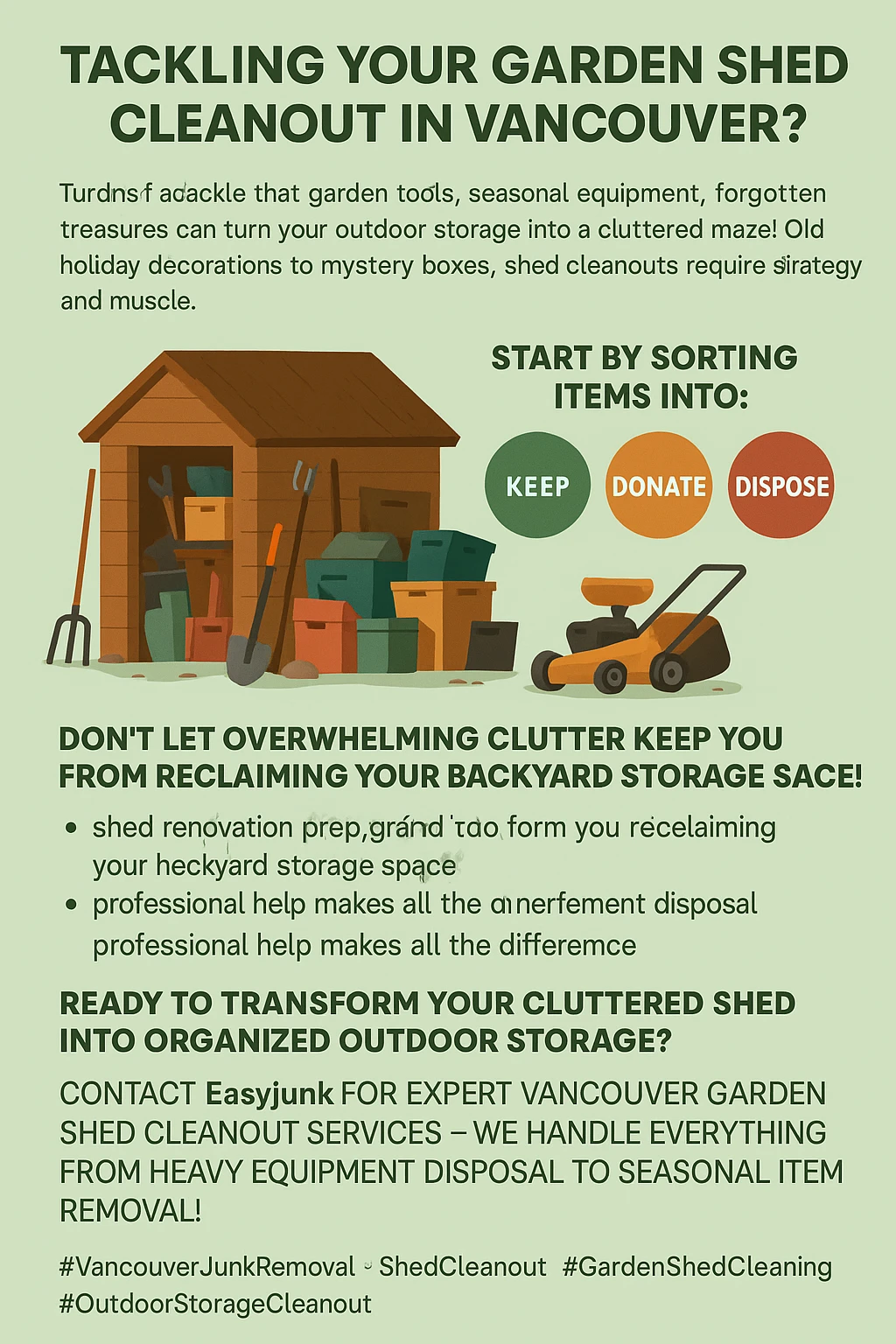
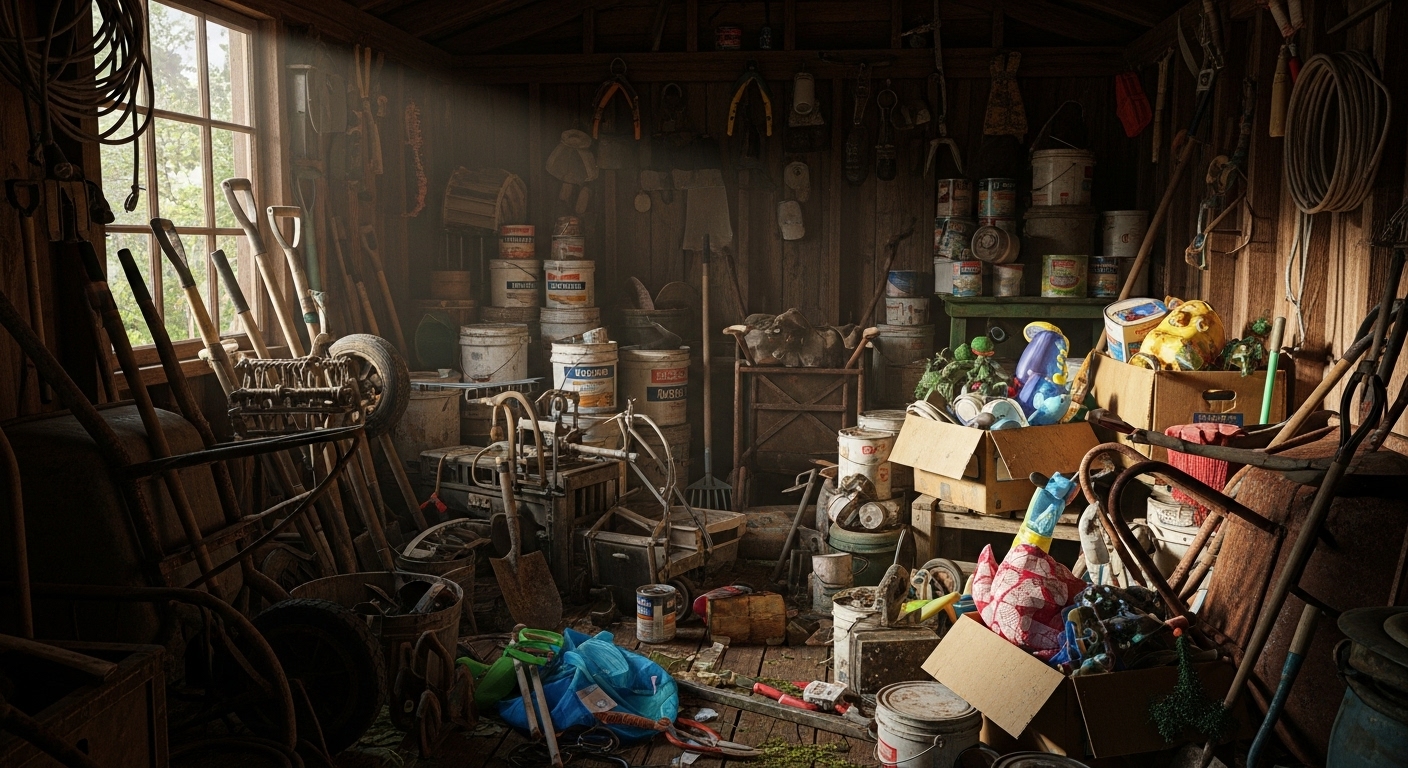
Garden sheds across Vancouver tell the same story. What started as organized storage for lawn mowers and gardening tools gradually transforms into an overwhelming maze of broken equipment, holiday decorations from holidays past, construction leftovers, and items that seemed too valuable to throw away. The Pacific Northwest’s wet climate makes this situation even worse, as Vancouver’s annual rainfall of nearly 1,200mm accelerates deterioration of wooden handles, causes metal tools to rust faster, and creates perfect conditions for mold and mildew to flourish in poorly ventilated spaces.
[IMAGE PLACEHOLDER FOR IMAGE1]
The problem extends beyond simple messiness. Cluttered sheds become safety hazards, harboring everything from sharp rusty tools to chemical containers that may have leaked over time. They attract unwanted pests like mice, rats, and wasps seeking shelter, while preventing homeowners from accessing the tools and equipment they actually need. Meanwhile, valuable storage space goes unused because there’s simply no room to organize anything properly.
This comprehensive guide provides Vancouver residents with practical strategies for tackling even the most overwhelming shed cleanout projects. Whether you’re planning a DIY weekend warrior approach or considering professional junk removal services, you’ll discover proven methods for sorting through years of accumulation, local resources for responsible disposal and recycling, and organizational systems that prevent future clutter buildup. From understanding Vancouver-specific disposal requirements to finding the most cost-effective cleanout solutions, everything you need to transform your shed from chaos to functional workspace is covered here.
Key Outtakes:
- Vancouver residents can choose between DIY shed cleanouts taking 1-3 days for average sheds or professional services starting at $80-100 with same-day availability and full-service removal
- Proper categorization into keep, donate, recycle, and dispose piles prevents 80% of stored items from remaining unused and streamlines the entire cleanout process
- Vancouver offers specialized recycling facilities for mattresses, appliances, and construction materials through Metro Vancouver transfer stations with specific disposal fees and acceptance criteria
- Professional junk removal companies in Vancouver recycle or donate up to 60% of collected materials, significantly reducing environmental impact while simplifying disposal logistics
- Strategic shed organization with moisture-resistant storage, elevated shelving, and labeled containers prevents future clutter accumulation in Vancouver’s humid climate
Understanding What Accumulates in Vancouver Garden Sheds
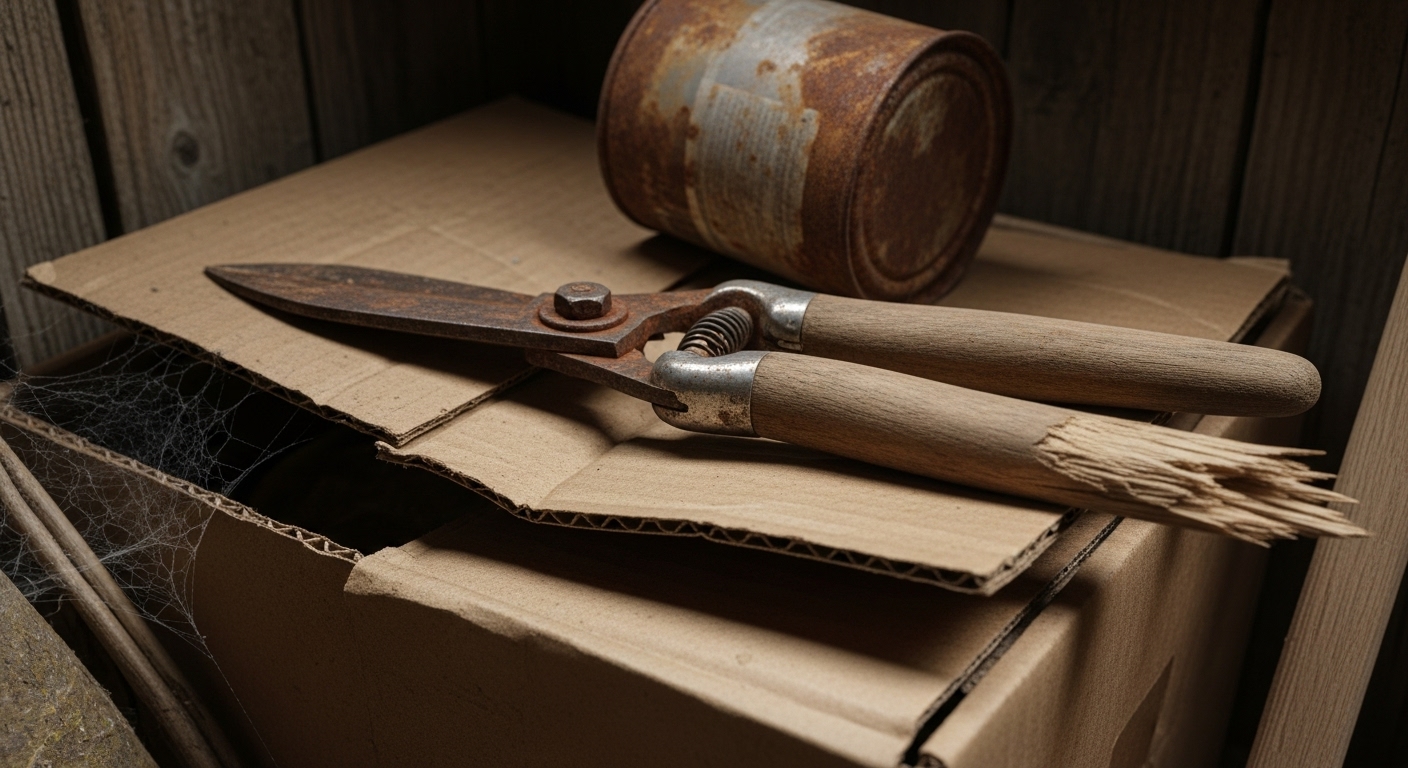
Vancouver’s unique climate creates specific challenges for shed storage that homeowners in drier regions never face. The combination of high humidity, frequent rainfall, and mild temperatures creates an environment where stored items deteriorate faster than expected. Wooden tool handles develop rot and splinter, cardboard boxes collapse from moisture absorption, and metal implements develop rust even when stored off the ground. This accelerated aging process means items that might remain usable for decades in Arizona or Alberta become safety hazards or worthless clutter within just a few years in Vancouver.
The most common culprits found during Vancouver shed cleanouts include gardening tools that haven’t seen use since the previous homeowner, seasonal patio furniture that’s been “temporarily stored” for multiple winters, and boxes of holiday decorations that have become home to spiders and mice. Construction materials from long-forgotten weekend projects pile up alongside paint cans with contents that have separated or frozen, creating both disposal challenges and potential hazards. Sports equipment seasons come and go, leaving behind hockey sticks, camping gear, and exercise equipment that seemed essential at purchase but rarely gets used.
The statistics around household clutter are staggering and shed storage follows similar patterns. Research shows that 25% of people with two-car garages cannot park due to clutter, and the same accumulation behavior affects outdoor storage spaces. Even more concerning, 69.3% of people acknowledge they have clutter problems, yet 33.99% don’t tackle decluttering projects due to lack of time. This creates a cycle where shed contents become increasingly overwhelming, making the cleanout task seem impossible and leading to further avoidance.
Beyond the inconvenience factor, neglected Vancouver sheds pose real health and safety risks. The region’s mild winters mean pests remain active year-round, with old sheds becoming home to hornets, wasps, mice, rats, raccoons, and opossums. Unlike other Canadian cities where freezing temperatures provide seasonal pest relief, Vancouver’s temperate climate supports continuous infestations. Additionally, 47.2% of people report that clutter in their homes makes them feel stressed, and this psychological impact extends to outdoor spaces where overwhelming shed contents create anxiety rather than providing helpful storage solutions.
The moisture-rich environment also creates perfect conditions for mold growth on organic materials, which can trigger respiratory issues and allergic reactions. Stored chemicals, paints, and automotive fluids may leak or deteriorate in ways that create toxic environments, especially in poorly ventilated sheds. Sharp objects become hidden dangers when buried under layers of other items, and electrical equipment stored in damp conditions can pose fire or electrocution risks. Understanding these Vancouver-specific challenges helps homeowners recognize why regular shed maintenance and strategic cleanouts aren’t just organizational projects – they’re essential safety measures.
Planning Your Vancouver Garden Shed Cleanout Strategy
Before diving into the physical work of clearing out your shed, successful cleanout projects require strategic planning tailored to your specific situation and Vancouver’s unique disposal landscape. The scope of your project will determine whether this becomes a weekend DIY endeavor or requires professional intervention. Small residential sheds typically take 1-3 days to clean thoroughly when working solo, while larger projects or sheds packed floor-to-ceiling may take several days of dedicated effort. Honest assessment at this planning stage prevents underestimating the time commitment and ensures you allocate adequate resources.
Creating a categorization system before removing the first item prevents decision fatigue and keeps the project moving efficiently. The most effective approach involves establishing five distinct categories: keep and reorganize, donate or sell, recycle through proper channels, dispose of as waste, and a smaller “probation” pile for items requiring more consideration. Professional organizers recommend the one-year rule – if you haven’t used something in the past twelve months and can’t identify a specific future need, it probably belongs in the donation or disposal category.
Safety preparation becomes crucial when dealing with years of accumulated items in Vancouver’s moisture-prone environment. Essential equipment includes heavy-duty leather gloves to protect against sharp or rusty objects, safety glasses for dusty conditions, and sturdy work boots with puncture-resistant soles. A basic first aid kit should be easily accessible, and having a fire extinguisher nearby provides peace of mind when dealing with unknown chemical containers or electrical equipment. Consider wearing a dust mask or respirator if there’s visible mold, extensive dust, or any suspicion of hazardous materials.
The choice between DIY and professional services often comes down to economics, physical capability, and time availability. DIY dumpster rentals in Vancouver range from $90-850 for 3-4 days, but this cost doesn’t include the significant labor investment, transportation to disposal facilities, or sorting requirements. Professional junk removal services start at $80-100 for smaller loads, with full truckloads typically costing $800-1,400 depending on the company. However, professional services complete the work in 2-hour windows, handle all physical labor, include disposal fees, and often recycle or donate items that DIY cleanouts would send to landfills.
Vancouver’s competitive junk removal market offers distinct advantages over other Canadian cities, with local companies typically charging 20-30% less than national franchises while providing superior service. Companies like Joey’s Junk charge $800 for complete 18-cubic-yard truckloads versus $1,400+ for franchise alternatives, with no additional per-kilometer transportation fees. The time savings often make professional services more economical when factoring in personal time value – most people can earn more in the 8-16 hours a DIY cleanout requires than the difference between DIY and professional costs, making the professional route both more convenient and financially sensible for complex cleanouts.
The Complete Step-by-Step Cleanout Process
The most critical phase of any shed cleanout involves completely emptying the space before making any organizational decisions. This approach provides clear visibility of both the shed’s condition and the full scope of accumulated items, preventing the common mistake of simply rearranging clutter rather than truly decluttering. Working systemat