
Vancouver Basement Flooding Junk Removal: How to Handle Water-Damaged Items and Prevent Mold During Cleanup
Dealing with a flooded basement in Vancouver and wondering what to do with all those water-damaged belongings? We’ll walk you through the essential steps for effective junk removal after basement flooding, plus share proven strategies to prevent dangerous mold growth during your cleanup process.
Picture this: you come home after Vancouver’s latest torrential downpour to find your basement looking more like an indoor swimming pool than a storage space. Your heart sinks as you see your grandmother’s antique dresser sitting in murky water, and that expensive home gym equipment you just bought last year is completely submerged. If you’re like most homeowners in the Lower Mainland, this scenario feels all too real – especially during our notorious rainy season when basement flooding becomes a genuine threat to thousands of properties across Metro Vancouver.
The thing about basement flooding is that it’s not just about the immediate water damage you can see. It’s about the ticking time bomb of decisions you need to make in the next 24 to 48 hours that will determine whether you’re looking at a manageable cleanup or a full-scale disaster that could cost you tens of thousands of dollars. Every minute counts when it comes to salvaging what you can and properly disposing of what you can’t, all while preventing the silent enemy that loves to follow flooding: toxic mold growth.
What makes basement flooding particularly tricky in Vancouver is our unique climate conditions, local regulations for disposing contaminated materials, and the critical need to coordinate emergency services during that crucial first couple of days. Most homeowners don’t realize that improper junk removal after flooding can actually make things worse, spreading contamination throughout their home or violating environmental disposal requirements that could lead to hefty fines down the road.
Key Outtakes:
- Time is everything: Water-damaged items must be assessed and removed within 24-48 hours to prevent mold growth, structural damage, and health hazards that can multiply cleanup costs exponentially.
- Professional assessment saves money: Trained specialists can distinguish between salvageable and non-salvageable flood-damaged items, potentially saving thousands in unnecessary disposal costs while ensuring safe handling of contaminated materials.
- Coordination is key: Combining emergency water extraction with strategic junk removal creates the most efficient and cost-effective basement flood recovery process, preventing conflicts between different service providers.
- Vancouver has specific rules: Metro Vancouver disposal regulations for contaminated materials require professional handling to avoid environmental penalties, WorkSafeBC violations, and potential health code infractions.
- Insurance matters: Proper documentation and coordination with certified junk removal services maximizes insurance claim success rates and reimbursement potential for flood damage recovery.
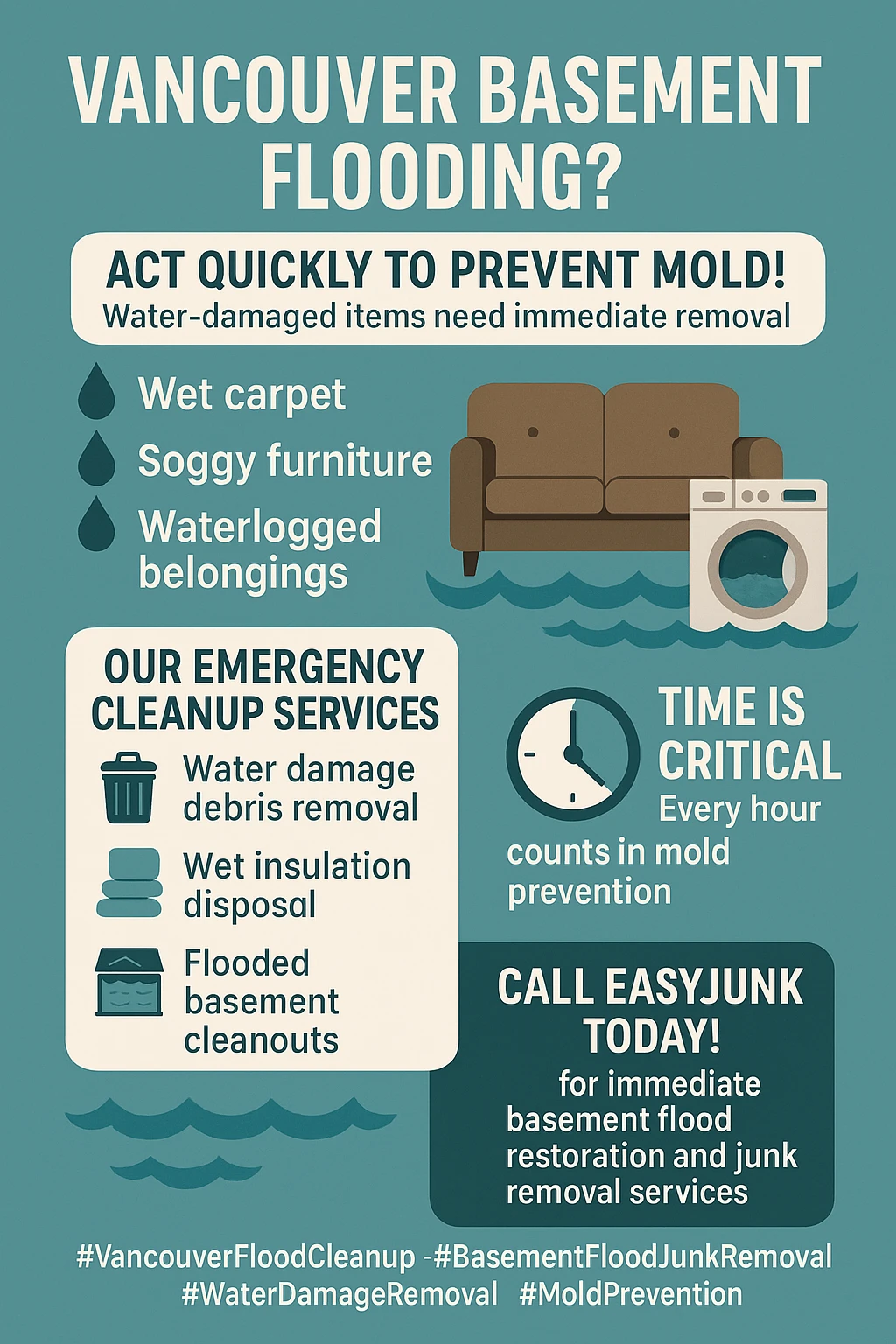
Understanding the Critical Timeline for Water-Damaged Item Removal
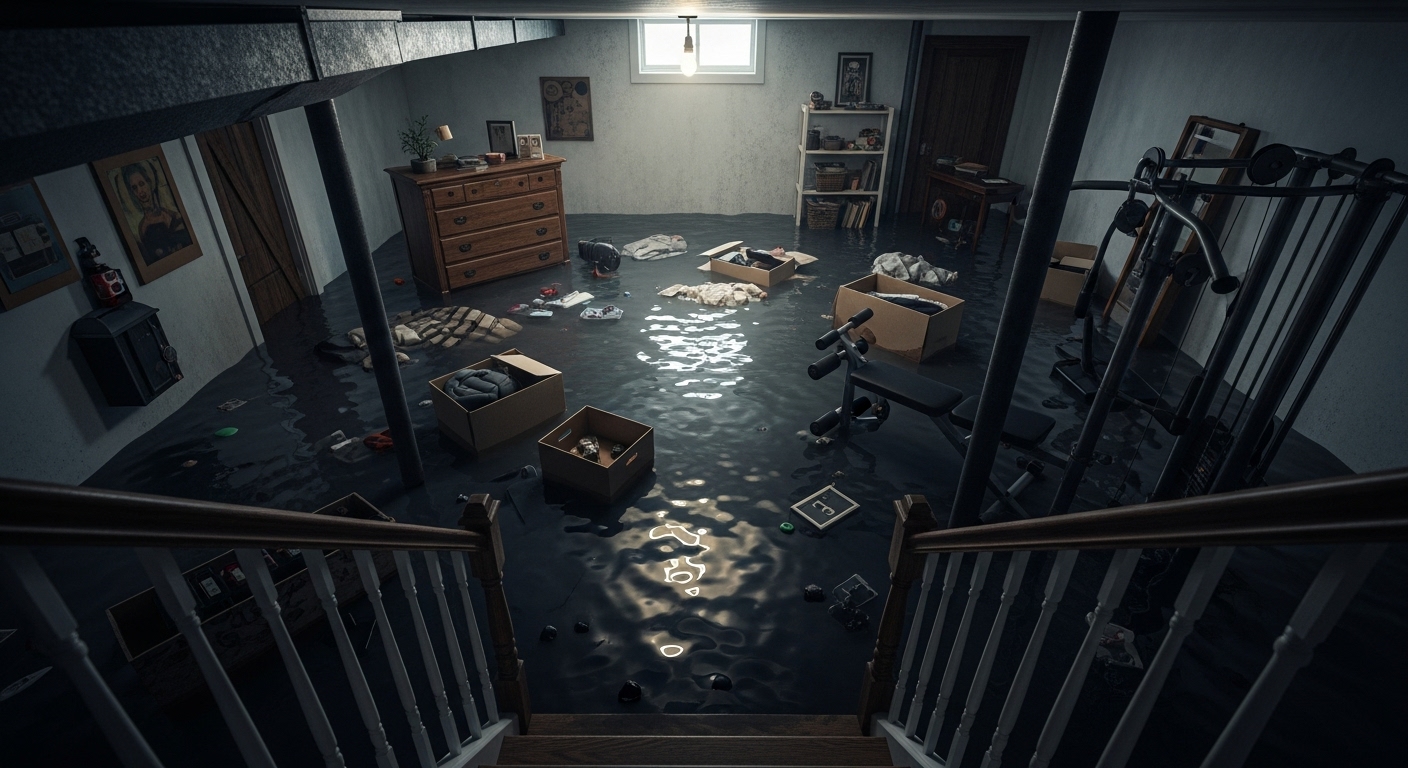
When your basement floods, you’re not just dealing with standing water – you’re racing against time itself. The moment water touches your belongings, a biological countdown begins that most homeowners don’t fully understand until it’s too late. Vancouver’s humid climate, with average moisture levels hovering between 70-80% year-round, creates an environment where this countdown moves even faster than in drier regions.
The science behind flood damage is both fascinating and terrifying. Within the first few hours after flooding, porous materials like wood furniture, carpeting, drywall, and fabric begin absorbing contaminated water like sponges. This isn’t just clean water we’re talking about – floodwater typically carries a cocktail of bacteria, chemicals, sewage, and debris that can pose serious health risks. The longer these materials stay wet, the deeper the contamination penetrates, making restoration increasingly difficult and expensive.
Here’s where things get really concerning: mold spores, which are naturally present in every environment, start to multiply rapidly once they find moisture and organic material to feed on. In Vancouver’s climate, visible mold growth can appear in as little as 24 hours, though the spores begin reproducing much earlier. By 48 hours, you’re looking at established colonies that can spread throughout your home’s ventilation system, creating air quality issues that can affect your family’s health for months or even years.
The structural integrity of your belongings also deteriorates rapidly once water damage sets in. Wooden furniture begins to swell and warp, laminated surfaces start to bubble and peel, and metal items begin developing rust that can spread to surrounding materials. Electronic equipment faces immediate damage to sensitive components, and even if they appear to work initially, water damage often causes delayed failures that can be dangerous.
What many Vancouver homeowners don’t realize is that their climate actually accelerates this damage timeline. The combination of cool temperatures and high humidity creates perfect conditions for mold growth, meaning that the standard 24-48 hour window for action might actually be shorter in the Lower Mainland. This is why immediate professional assessment becomes so critical – waiting even an extra day to make decisions about what to keep versus what to remove can mean the difference between saving treasured belongings and losing them forever.
Professional Assessment vs DIY: Making Smart Decisions About Water-Damaged Items
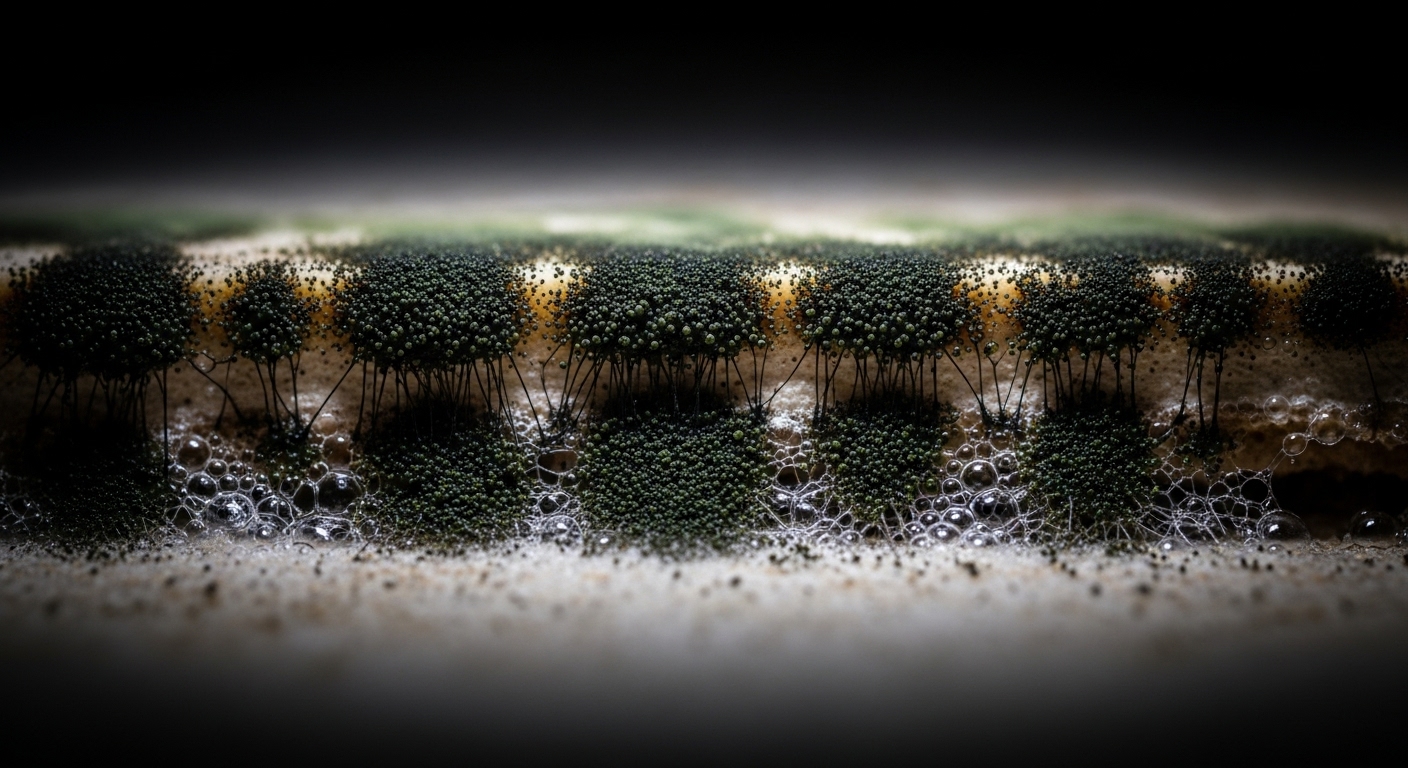
After the initial shock of discovering your flooded basement wears off, the next challenge becomes figuring out what can be saved and what needs to go – and this is where many well-intentioned homeowners make costly mistakes. The temptation to immediately start hauling everything out to the curb is understandable, but it can result in throwing away thousands of dollars worth of salvageable items while keeping things that pose serious health risks.
Professional junk removal specialists who work specifically with flood damage understand something that most homeowners don’t: the type of material, the source of the flooding, and the contamination level all play crucial roles in determining what’s worth saving. Non-porous materials like plastics, metals, and ceramics often can be properly cleaned and disinfected, even after significant water exposure. These items don’t absorb water the same way, making them much more likely to be restored to safe, functional condition with the right cleaning protocols.
On the flip side, porous materials present a much more complex situation. Fabric upholstery, wooden furniture, carpeting, and paper products absorb water quickly and deeply, creating ideal breeding grounds for bacteria and mold. However, the decision about whether to keep or dispose of these items isn’t always black and white. High-value antiques might be worth professional restoration even if the process is expensive, while newer, easily replaceable items might not justify the cost and risk.
The source of your flooding makes a huge difference in these calculations. Water damage professionals classify flooding into three categories: clean water (from broken pipes or rainfall), gray water (from appliances or minor sewage issues), and black water (from major sewage backups or contaminated flooding). Clean water damage offers the best chances for salvaging belongings, while black water contamination often means that porous items need to be disposed of regardless of their value, simply because they can’t be safely cleaned.
Vancouver-Specific Material Considerations
Living in Vancouver adds another layer of complexity to these decisions because of our specific climate and environmental factors. The high moisture content in our air means that items might appear dry on the surface while still retaining moisture deeper within, creating ongoing mold risks. Professional assessment tools like moisture meters and thermal imaging cameras can detect hidden water retention that’s invisible to the naked eye.
Additionally, Vancouver’s environmental regulations around disposal of contaminated materials mean that certain items can’t simply be put out with regular garbage pickup. Electronics, treated woods, and anything contaminated with sewage or chemicals require special handling and disposal methods. Attempting to dispose of these items improperly can result in fines and environmental violations that add unexpected costs to your recovery process.
Professional services also understand the insurance implications of various disposal decisions. Insurance adjusters often require documentation showing that disposal decisions were made based on legitimate safety or restoration concerns rather than convenience. Having professional assessments backing up your choices can be crucial when filing claims and seeking reimbursement for both the disposed items and the removal services themselves.
Mold Prevention Through Strategic Item Removal
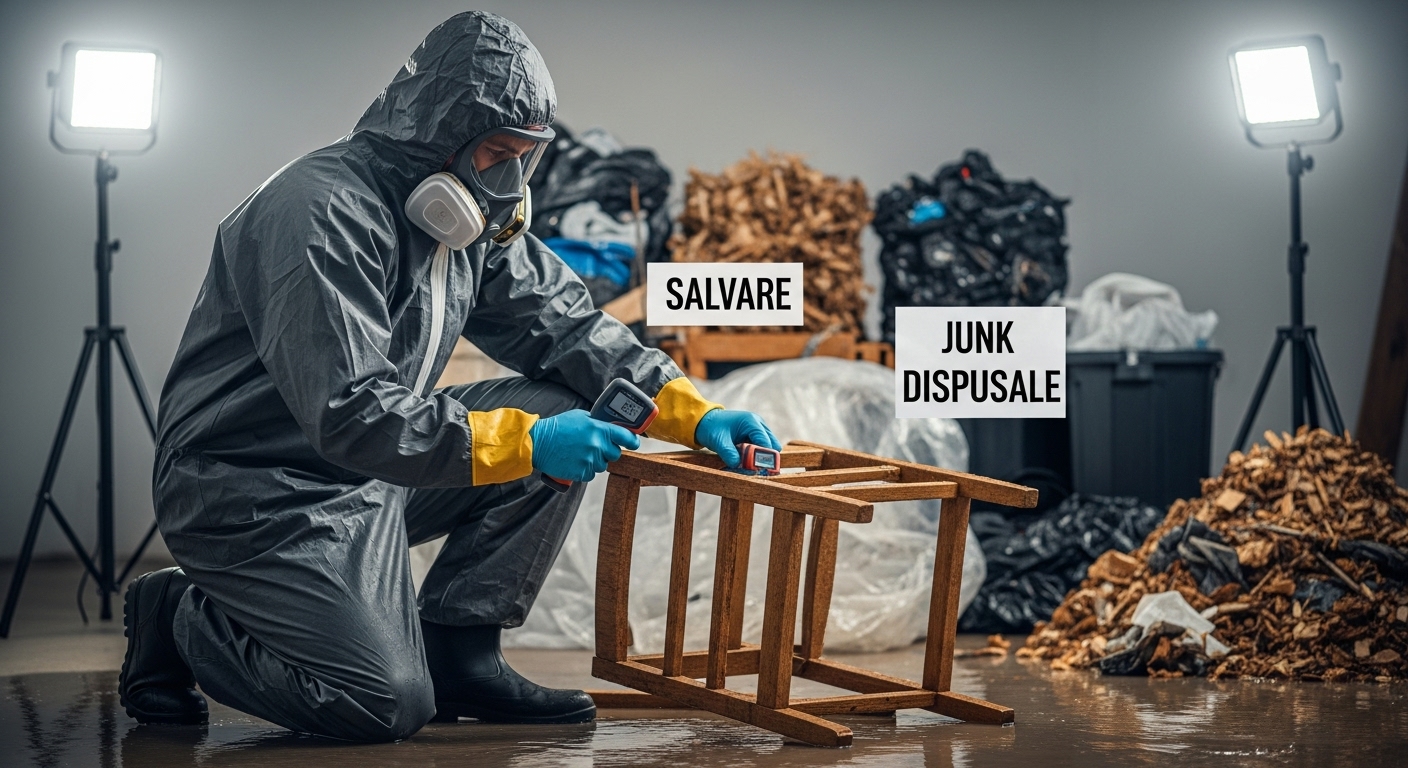
While getting water out of your basement is the obvious first priority, preventing mold growth through strategic item removal is equally critical for long-term success. Mold doesn’t just damage the items it grows on – it creates airborne spores that can contaminate your entire home if not properly contained during the removal process. This is where the difference between professional and amateur approaches becomes most apparent and most costly.
The key to effective mold prevention lies in understanding that wet materials aren’t just damaged – they become active sources of contamination that continue spreading problems as long as they remain in your home. Carpeting is particularly probl

